



How is pH
measured?
A pH instrument consists
of three main components, refer to fig 1.

Teflon ® Dupont Company
- The pH measuring cell:
Hydrogen sensitive glass is blown onto the end of an inert glass
stem. A silver wire treated with silver chloride (Ag/AgCl) is
sealed inside the glass (cell) with a solution of potassium chloride
saturated with silver chloride. The measuring solution has a
neutral pH level of 7 or 0 mV.
A properly hydrated glass sensor will
produce a "Gel Layer" on the inside and outside of the glass
membrane. The "Gel Layer" enables hydrogen ions to develop an
electrical potential across the pH glass sensor and the millivolt
signal varies with hydrogen ion activity on the glass membrane while
submerged in the solution being tested.
- The Reference cell:
A silver wire treated with silver chloride (Ag/AgCl) is sealed
inside an inert glass housing (cell) with a solution of potassium
chloride saturated with silver chloride. The inert glass prevents
hydrogen ion activity from test solutions to influence the reference
cells constant millivolt signal. The combination of the reference
electrode silver-silver chloride wire and the saturated potassium
chloride solution develops a constant 199-millivolt reference
signal. The millivolt signal produced inside the reference
electrode does not vary as long as the chloride concentration
remains constant. The reference voltage is used as a baseline to
compare variations or changes in solution being tested. The
reference cell is in contact with the test solution through a
reference junction that is commonly made of porous Teflon ® ,
ceramic or a wick type material called a pelon strip. This junction
completes the measuring circuit of the pH sensor.
- Display meter: When the pH
sensor is placed in a solution, the pH-measuring cell develops a
millivolt signal that reflects the hydrogen ion activity of the test
solution. A high impedance meter accurately measures the small
millivolt changes and displays the results in pH units on either an
analog meter or digital display.
Temperature
considerations:
The pH glass membrane is sensitive to
the temperatures of solutions being tested. Prolonged use and/or
exposure to temperatures (above 35° C) will accelerate the aging and
increase the chemical attack to the glass membrane which will shorten
the overall service life of the sensor.
ELEVATED TEMPERATURES WILL
SHORTEN THE SERVICE LIFE OF A pH SENSOR.
Increased temperatures will also
decrease the impedance of the glass membrane. The decrease of the
impedance effects the millivolt output of the glass membrane.
Temperature changes close to neutral (pH 7) usually do not effect pH
levels, however, when levels are < pH 3 and > pH 11 a
dramatic error may occur. This problem is resolved using a built in
ATC (Automatic Temperature Compensation)
which uses a mathematical formula (Nernst equation) to correct pH
errors due to temperature factors.
Other factors, that
effect the life of a sensor:
Because standard glass electrodes are
manufactured using a silver/silver chloride electrode inserted into a
potassium chloride/silver chloride solution, the following list of
solutions cause the reference solution to precipitate. If the
following solutions are tested, it is recommended that the pH sensor
well be thoroughly rinsed. The testing of
these solutions will severely reduce the service life of the pH
sensor:
- Heavy metals - silver, iron, and
lead
- Proteins
- Low ion solutions - distilled water
- High sodium concentrates
- Sulfides
- Fluorides (in high concentrations or
prolonged use)
Note: This is not a complete
list of solutions that can cause the reference solution to
precipitate.
Sodium ion error:
As solutions approach and exceed
the pH level of 12.0, the high concentration of sodium ions interfere
with the standard glass membrane and cause pH levels to be displayed
lower than actual pH levels. If solutions being tested are normally
high alkaline, (>12 pH) a probe manufactured with special glass may be
required. The special glass may be used throughout the pH range of 0
to 14, but due to the natural high resistance of the glass, it will
significantly increase the overall time needed to analyze a sample.
Constant use in solutions with pH levels higher than 12
will reduce the life of the probe.
Calibration:
The break down of the pH sensor
electrodes and the depletion and/or saturation of the reference
solution require your pH instrument to be re-calibrated. This should
normally be performed twice a month, but depending on the actual use
of the instrument it may be necessary to increase the intervals
between calibrations.
Refer to your Myron L Company
instruction manual for detail instructions on your specific instrument
calibration procedures (get one here -
Download
Center).
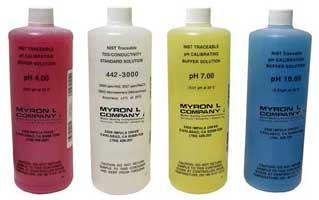
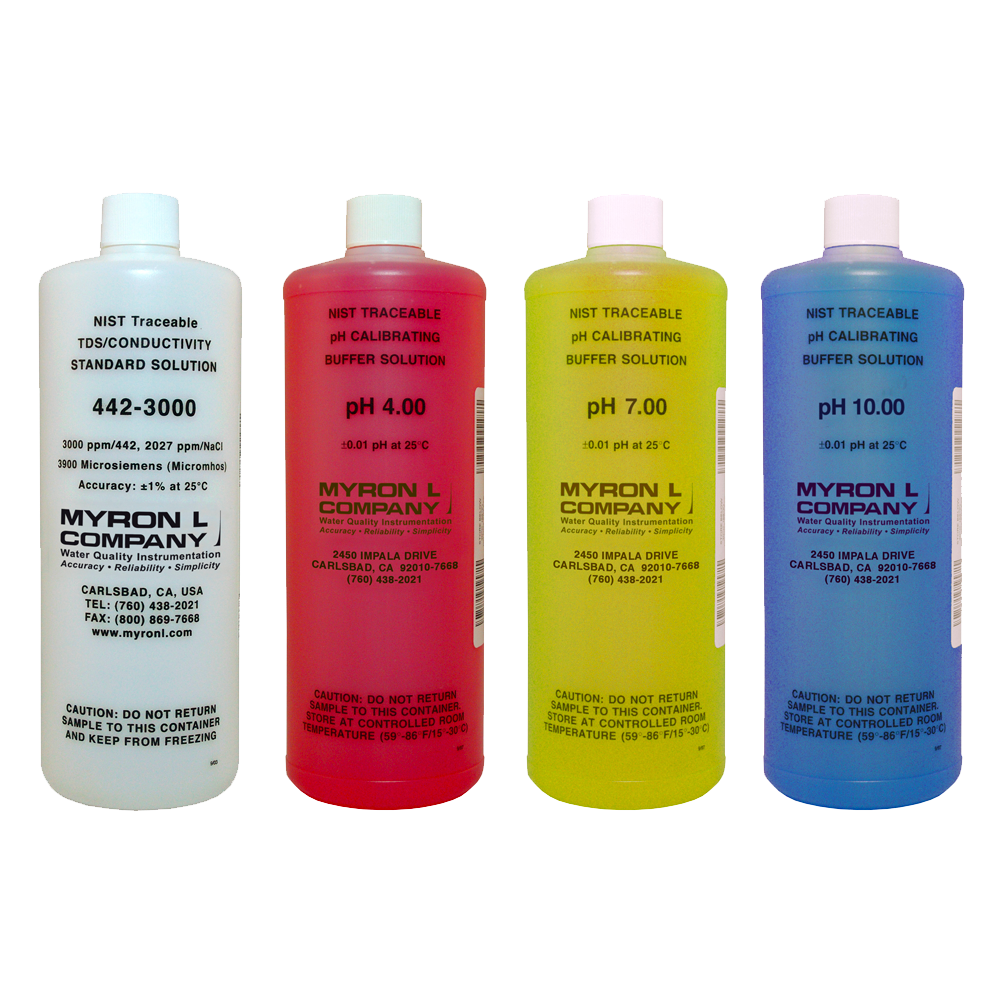
The calibration should be performed
using at least two pH buffer standards. The initial calibration
should use Myron L pH buffer solution 7, this will check and allow the
instrument to be adjusted so its output reflects 0 millivolts,
neutral, or pH 7. A second calibration using a standard solution that
reflects the normal range of solutions being analyzed is needed. If
acidic solutions are normally tested, a Myron L pH buffer solution 4
should be used. If solutions to be tested are normally alkaline a
Myron L pH buffer solution 10 should be used. It is not necessary to
calibrate your instrument over three standards (4, 7, and 10) unless
during normal daily use of the instrument the solutions being tested
varies from low to high pH ranges. In this case, an increase of
calibration intervals is also recommended.
How to maximize the life
of your Myron L pH or pH/ORP sensor:
The Myron L Company uses a
general purpose glass pH sensor. This glass sensor may be used in
most
applications. To ensure maximum life of your Myron L pH test
instruments, the following information should be considered whether
you are a distributor or an end user.
It is the experience of our repair
technicians that 90% of all premature pH sensor failures can be
prevented with the incorporation of a few maintenance procedures. The
following should be performed after using the Myron L test instrument
or if you plan to store your test instrument for an extended period of
time.
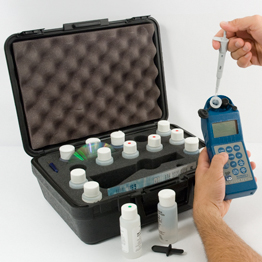
The pH sensor well (fig. 2)
must be filled with Myron L storage
solution (preferred), Myron L pH buffer 4 or tap water with table salt
added and its protective cap (with foam insert) firmly installed.
Failure to do so will:
- Allow the glass membrane to dry
out. A de-hydrated glass membrane will not produce the necessary
"Gel layer" on the sensor surface, which is essential to allow the
exchange of hydrogen ions (measure pH).
- Allow airborne contaminants to
settle on the glass membrane surface. Once contaminants dry onto
the surface of the glass membrane it will inhibit the transfer of
hydrogen ions. (See Factory Approved Cleaning
Process below)
- Allow the reference junction to dry
out. The reference junction material is usually a wick or fiber
type material that completes the electrical circuit between the
reference electrode cell and the solution being tested. Dehydration
causes the reference solution to leach out of the electrode cavity
and form crystals in the junction. This is normally referred to as
the "Bridging effect".
Repeated dehydration of the pH or
pH/ORP sensor will cause the instrument to have a slower response time
and be more difficult to calibrate. Dehydration will significantly
reduce the normal service life of the sensor.
Store spare pH or pH/ORP sensors in a
refrigerator. "DO NOT FREEZE"
Take proper precautions not to allow the temperature to fall below
freezing, this will cause the solution to expand and may damage the
electrodes inside the sensor. Storage in a refrigerated environment
will slow the evaporation of the storage solution, but not prevent
evaporation. Always inspect and replace the storage solution in your
spare sensors on a regular basis.
Note:
When using the Myron L storage solution,
it is common for white crystal formations to form around the seal of
the pH sensor well and protective cap. This is a normal occurrence as
the solution evaporates. Never store the
sensor in high purity water (distilled or de-ionized).
Approved Factory
Cleaning Process for the pH sensor:
During the normal use of your Myron L
hand held pH or pH/ORP instruments, the cleaning of your pH sensor
bulb will have to be performed. The cleaning is usually due to the
deposits of organic and inorganic contaminates left on the sensor from
the solutions being tested. If you suspect your instrument is
inaccurate, the display value drifts or the response is slow and
sluggish perform the following tests:
Rinse the sensor well (three times) and
fill with Myron L pH buffer 4 solution. If the pH continues to
drift below the pH 4 level (i.e. 3, 2, or 1) repeat the test using
Myron L buffer 10. If the pH level drifts beyond the pH level of 10
(i.e. 11, 12 etc.) the cleaning procedure outlined below may be
performed to increase the performance and accuracy of your test
instrument.
While performing the above tests, if
the pH levels of the buffer solutions 4 and 10 actually drift toward
pH 7 this is an indication that the pH sensor is damaged and needs to
be replaced.
Caution:
Wear proper eye protection and
gloves during the following cleaning procedures.
The Myron L Company recommends
the following procedure to clean and recover your pH or pH /ORP
sensor.
NOTE: Not all pH or
pH/ORP sensors can be recovered.
- Fill the pH/ORP sensor well with
100% alcohol isopropyl alcohol, if not available use rubbing alcohol
(70%) this will remove any oils.
- Allow the sensor to soak for 10
minutes.
- Rinse with RO or DI water.
- Rinse the sensor well (three times)
and fill with Myron L storage or Myron L pH buffer 4. Replace the
protective cap and allow the sensor to recover over night.
- Re-calibrate the instrument
according to the Myron L instruction manual that was provided with
your instrument (get one here - Download Center). If the instrument fails to calibrate properly,
continue to the next step.
If the above procedure did not recover
the pH sensor function, perform the following:
- Fill the pH or pH/ORP sensor well
with a hot salt solution 60° C (140° F), potassium chloride (KCI
preferred) or hot tap water with table salt (NaCl). Allow the
solution to cool.
- Re-calibrate the instrument
according to the Myron L instruction manual that was provided with
your instrument. If the instrument fails to calibrate properly, the
pH or pH/ORP sensor must be replaced.
Warranty:
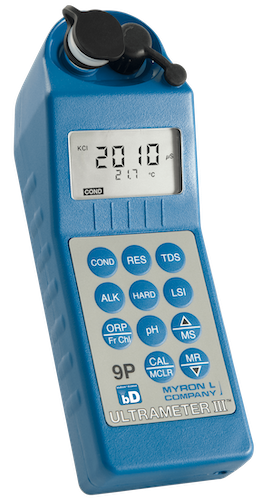
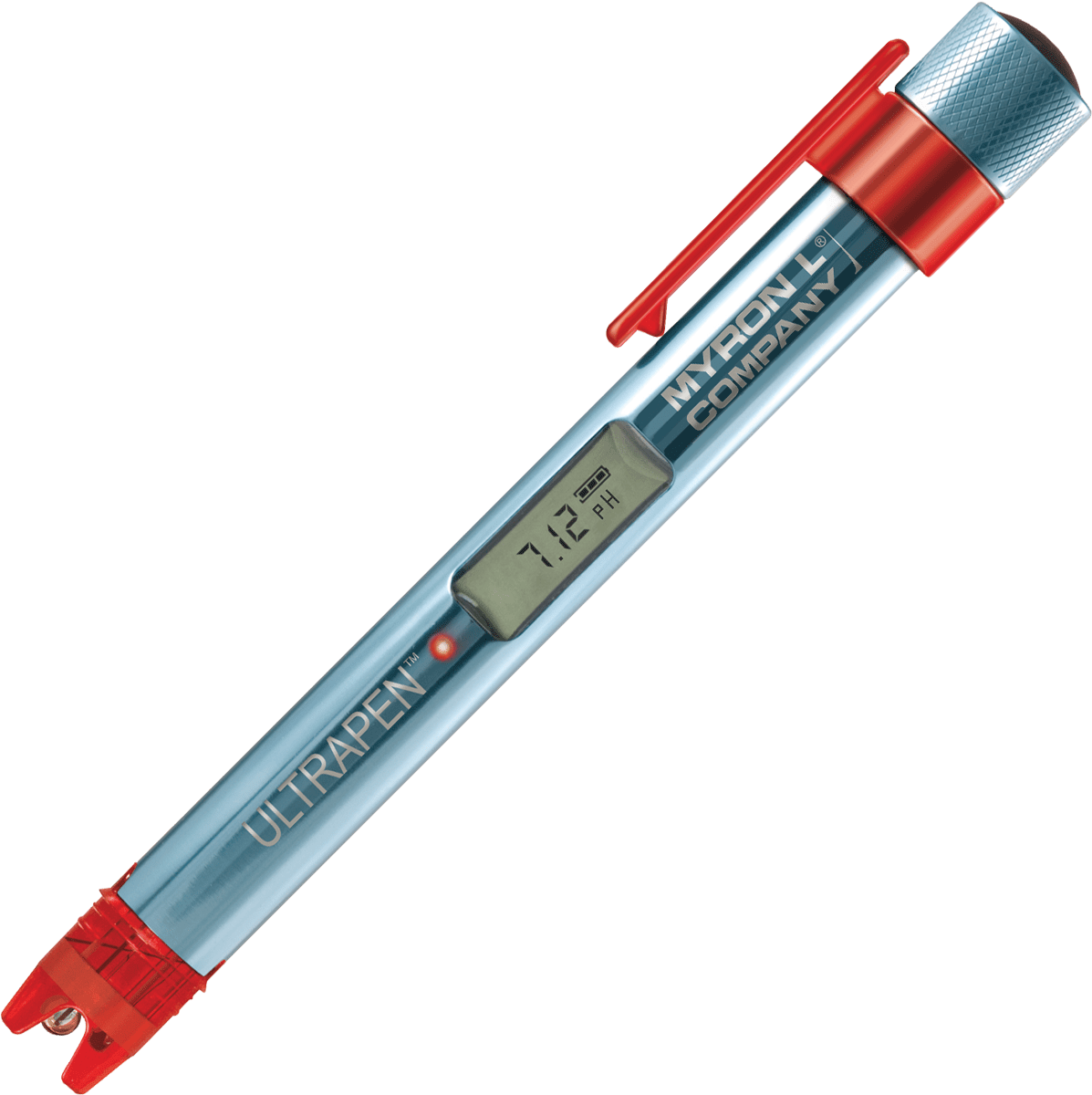
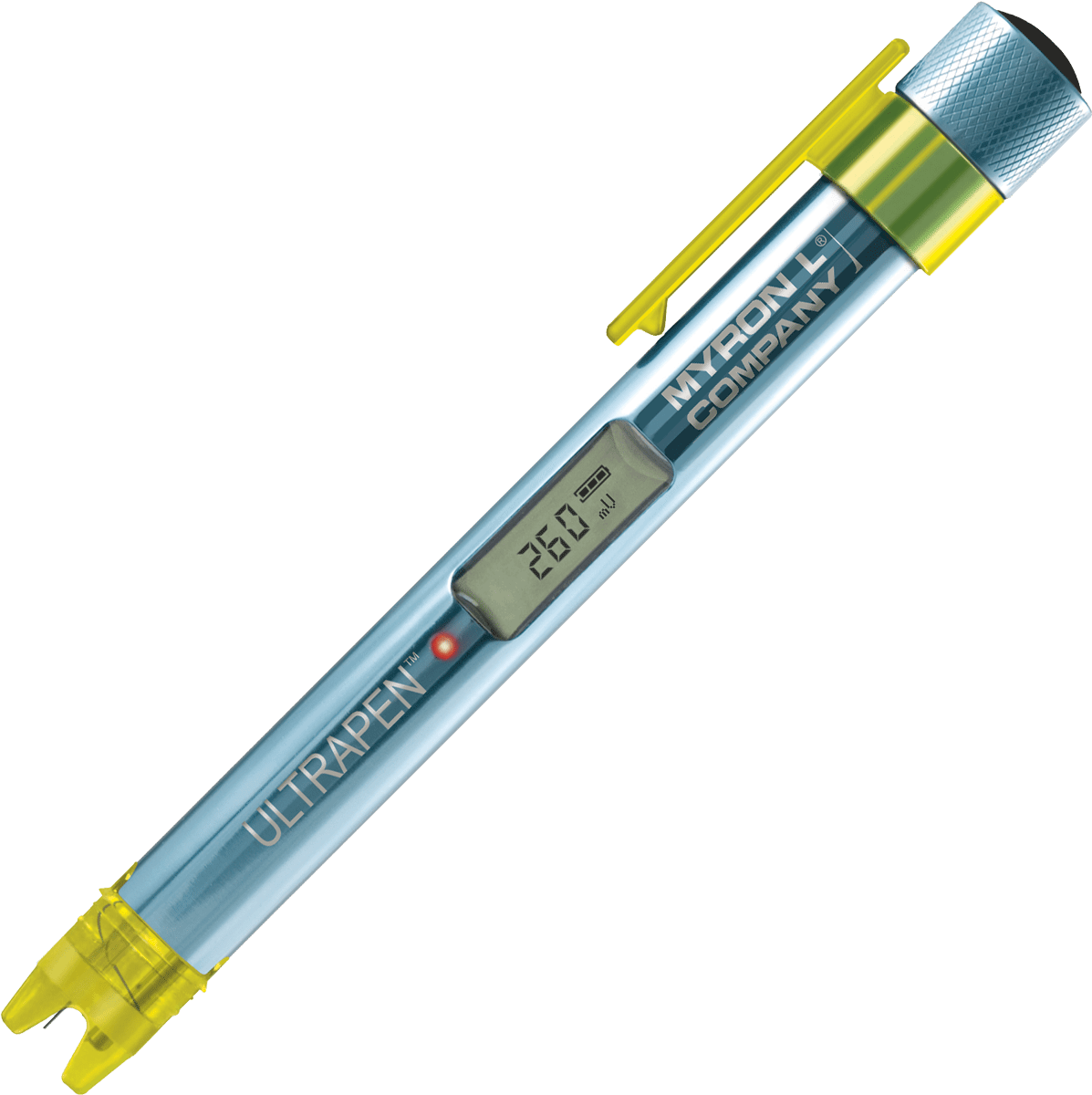
The Myron L Company warrants the Ultrameter™, TechPro™ and pDS meter pH and
pH/ORP sensor assemblies against manufacturer
defects for 6 months from the date the instrument or the
replacement sensor assembly was purchased and put into service by the
end user. Failure to maintain proper hydration of the glass pH sensors
or the use of the instrument in any manner not described in the
operation manual supplied with the instrument will void the factory
warranty.
CAUTION:
If you do not use your
Myron L instrument on a regular basis, the storage solution in the
pH or pH/ORP sensor well will evaporate over time and must be
replenished. To prevent premature pH glass sensor failure, The Myron L
Company suggests the implementation of a preventative maintenance
program. Failure to do so could void the factory warranty. The
measuring of concentrated chlorinated solvents such as Acetone, Xyline,
and other similar harsh chemicals in your Myron L instrument is not
recommended. The use of chlorinated solvents may void the manufacturer
warranty. |